Why Would My Teen Need Bone Grafting Before a Dental Implant?
Learning that your teen may need a bone graft before dental implant treatment can raise questions. Is it necessary, and why not replace the tooth now?
A graft may be recommended when a missing-tooth area is too thin, narrow, or damaged to hold an implant. For teens, jaw growth also matters. The plan must protect the space while preparing for a stable replacement.
Why Is a Bone Graft Needed First?
A dental implant sits inside the jaw like a replacement root. It needs enough support to stay steady and create a natural-looking result.
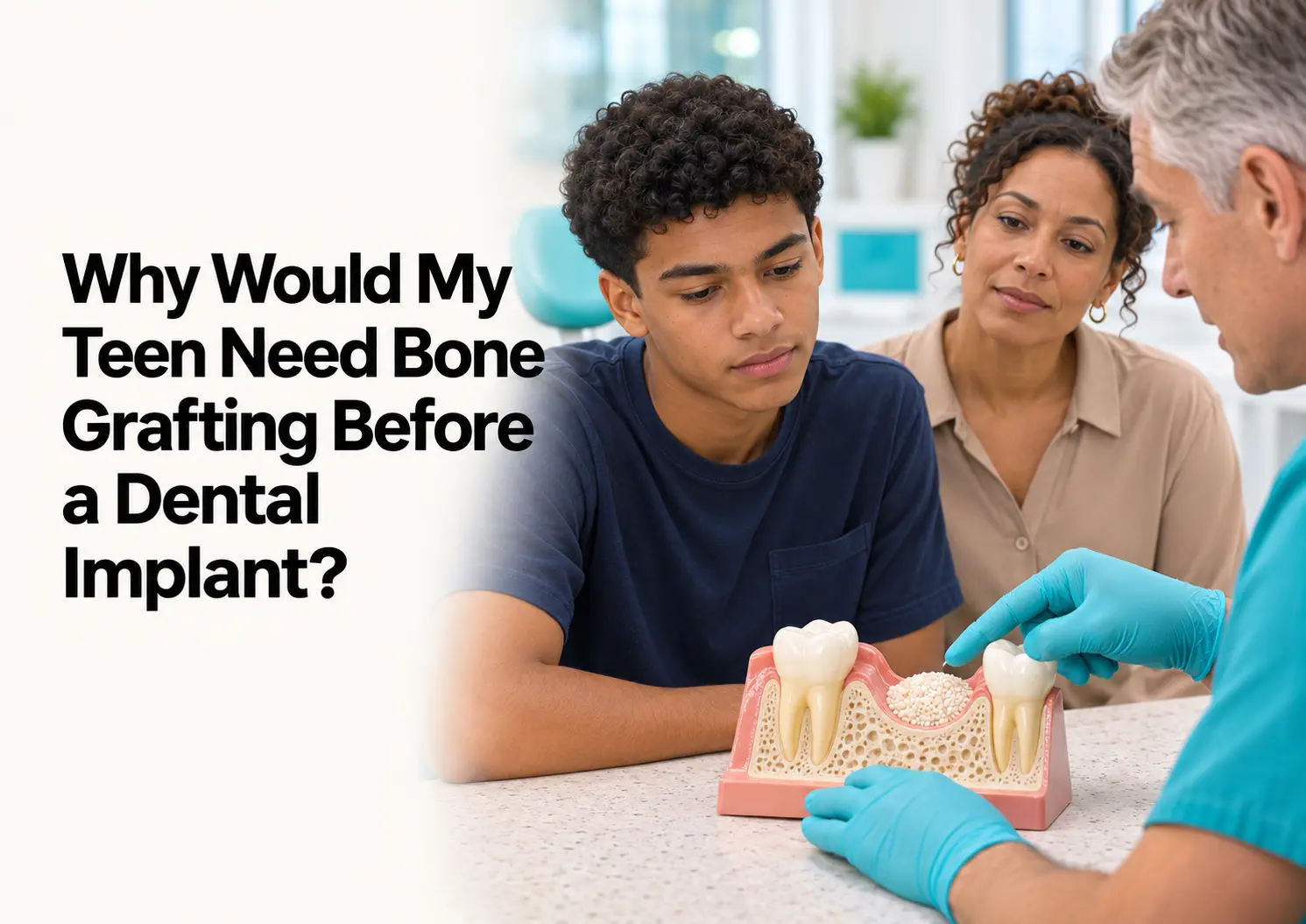
A dental bone graft adds material where support is lacking. The teen’s jaw gradually grows around it and strengthens the site. Not every teen needs grafting. Scans, tooth-loss history, available support, and growth shape the decision. Whether grafting is needed must be assessed individually.
An oral surgeon can evaluate the missing tooth and surrounding jaw.
Why Can a Teen Lose Jaw Support?
Several situations can affect support for a future teen dental implant.
Sports Injuries Can Damage the Area
A hard hit during sports or a fall can knock out or badly break a tooth. The injury may also damage the jaw around it, even when the visible gap looks small.
Missing Adult Teeth Can Leave Less Support
Some teens never develop one or more adult teeth. Without a tooth in that spot, the jaw may be too narrow for an implant. Braces may be needed to create or hold the correct space.
Delayed Replacement Can Thin the Jaw
After a tooth is removed, the unused area can gradually shrink. In selected cases, grafting during tooth extraction helps preserve the site for a future replacement.
Infection Can Weaken the Area
A deep cavity, failed earlier treatment, or long-lasting infection can damage support around a tooth. After the tooth is removed and the area is cleaned, a bone graft for tooth implant planning may be advised.
Does Teen Jaw Growth Change Implant Timing?
Yes. An implant stays fixed, but a teen’s jaw and nearby teeth may keep changing. If it is placed too early, the replacement tooth can later look shorter, lower, or out of line. Implant placement in growing patients requires careful timing because jaw changes can affect the implant’s final position.
Age alone cannot confirm readiness because growth ends at different times. The dentist may compare images, review tooth development, and consider overall growth.
A graft may protect the site now even when the implant must wait. Care from a pediatric dentist, surgeon, and orthodontist can keep timing and space coordinated.
How Is the Implant Area Checked?
The dentist or surgeon examines the gap, gums, bite, and nearby teeth. Images show the jaw’s height, width, and past damage.
The team asks when the tooth was lost, whether braces are planned, and whether growth appears complete. This helps determine whether no graft, a small graft, or more rebuilding is needed.
What Happens During a Dental Bone Graft?
The area is numbed first. The surgeon places graft material where more support is needed and protects it while the gum heals. The material acts as a framework for the teen’s own jaw to grow around.
Bone Graft for tooth implant may come from the patient, a screened donor source, an animal source, or a lab-made material. The choice depends on the area. This Cleveland Clinic dental bone graft guide explains materials and recovery.
How Long Before the Dental Implant?
Short-term soreness, swelling, and diet changes often improve within days. Deeper healing inside the jaw usually takes several months. Initial recovery may take about a week, while the graft itself generally needs at least three months to heal. Larger grafts can take longer.
A small jaw bone graft dental procedure may sometimes be completed when the implant is placed. A larger graft usually heals first. If the teen is still growing, the wait may continue after the graft is ready. Some treatment steps can be combined, but this depends on the condition of the jaw and the amount of support needed.
A removable tooth, bonded temporary tooth, or clear retainer with a false tooth may protect appearance and space during this period. Temporary replacement options can be used while the implant site heals.
Should the Bone Graft Happen Now or Later?
Timing depends on the site and the teen’s growth.
| Treatment situation | Possible plan |
| A damaged tooth is being removed | Preserve the area with graft material |
| The jaw is still growing | Protect the space and use a temporary tooth |
| Growth is complete but support is thin | Graft, allow healing, then place the implant |
| Only minor support is missing | Graft and implant may happen together |
| The scan shows enough support | Proceed without grafting if appropriate |
Dental bone graft does not automatically mean immediate implant placement. The dental implant team should explain the reason and timing for each step.
What Happens If a Needed Graft Is Skipped?
Without enough support, implant placement may be less predictable. The final tooth’s position or appearance may suffer, or more rebuilding may be needed later.
Still, grafting should not be automatic. Ask to see the scan and where support is missing. If the implant must wait, ask how the gap and nearby teeth will be protected.
What Should Parents Ask Before Treatment?
Ask these questions at the planning visit:
- Has my teen’s jaw finished growing?
- How much support is missing?
- What caused the problem?
- Should grafting happen now or later?
- Can the graft and implant happen together?
- What temporary tooth can be used?
- Will braces change the timing?
- When can school and sports resume?
- What is the full treatment timeline?
Build the Right Implant Foundation at the Right Time
A bone graft before dental implant treatment creates support, but teen planning also requires a growth check, space protection, and coordination with braces or a temporary tooth.
A complete evaluation can show whether grafting is needed now, later, or not at all. The right timing supports a stronger, better-positioned future implant.
Why Choose Northgate Dental Center?
Northgate Dental Center combines pediatric dentistry, orthodontics, oral surgery, implant care, and general dentistry in one convenient practice. Our team evaluates your teen’s growth, missing tooth, jaw support, and treatment timing, then coordinates each step. Schedule a consultation for a clear, personalized plan designed around your teen’s smile and needs.