Does My Child Need a Root Canal? Signs Parents Should Watch For

A child may complain about a sore tooth and feel fine an hour later. However, pain that returns, wakes your child at night, or comes with swelling needs attention.
Common child root canal symptoms include lingering sensitivity, chewing pain, a gum bump, facial swelling, or a tooth that turns dark. These signs do not confirm treatment. A pediatric dentist must examine the tooth and see how far the damage has reached.
What Root Canal Treatment Means For Kids
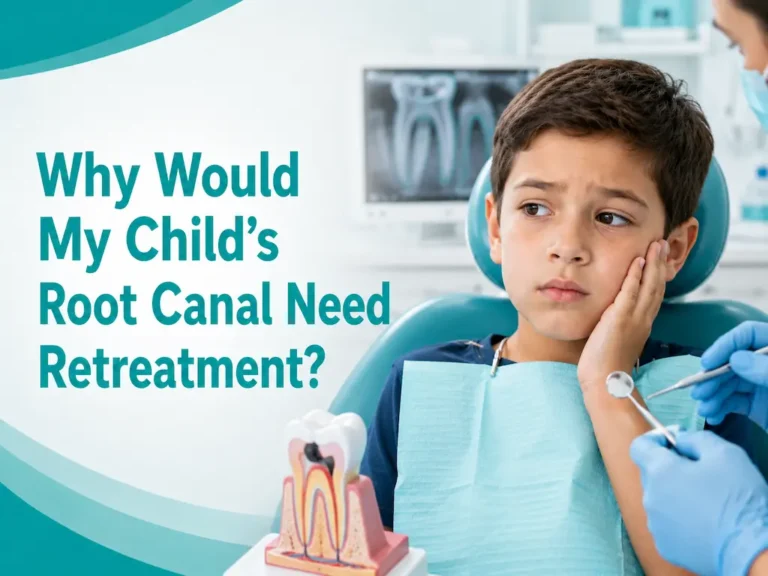
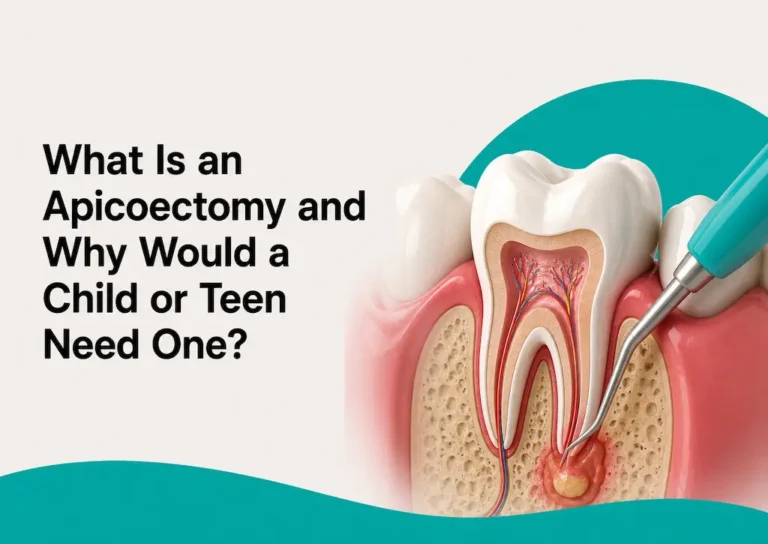
A root canal for kids may be needed when a deep cavity, crack, or injury damages the soft center of a tooth. The dentist cleans and seals the damaged space, then may cover the tooth for protection.
A pediatric root canal can differ for a baby tooth and an adult tooth. The goal is to stop pain, control infection, and save the tooth when possible. Learn more about root canal treatment.
Child Root Canal Symptoms To Watch
Pain That Keeps Returning
Pain that starts without eating, becomes stronger, or wakes your child can point to a deeper problem. Younger children may rub their cheek or become upset during meals.
Sensitivity That Lingers
A quick reaction to ice cream may be mild sensitivity. Pain that remains after hot or cold food is gone is more concerning. Tooth nerve pain in a child may feel like throbbing, pressure, or a sharp pain that fades slowly.
Pain While Chewing
Watch for changed eating habits. A child may chew on one side, refuse crunchy food, eat slowly, or say one tooth hurts when biting. Pressure may hurt even when the tooth feels comfortable between meals.
Swelling Around A Tooth
Swollen or tender gums can signal a child tooth infection. Swelling may remain near one tooth or spread into the cheek. Even when pain is mild, swelling should be checked promptly.
A Gum Bump Or Bad Taste
A white or yellow bump near a tooth may drain and leave a bad taste. Do not squeeze or pop the bump because the source remains inside or around the tooth.
A Tooth Turning Dark
A gray, brown, or dark tooth can appear after a fall, sports injury, or damage inside the tooth. It may not hurt, but it still needs an examination.
A Deep Cavity Or Injury
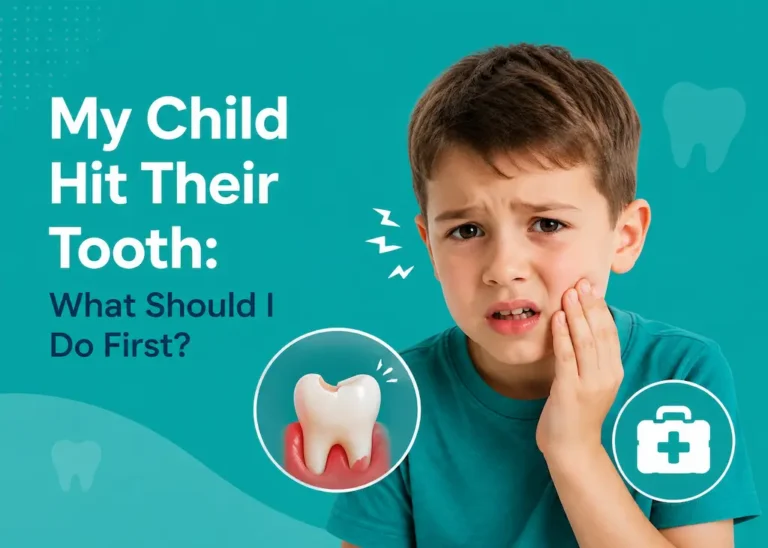
A large hole, broken edge, or hard hit can allow damage to reach the tooth’s center. Severe pain may not begin immediately. Tell the dentist about any recent falls.
When A Child Toothache May Not Need A Root Canal
Not every toothache requires root canal treatment. Food caught between teeth, gum irritation, a loose baby tooth, or brief sensitivity can cause temporary discomfort. A smaller cavity may only need a dental filling.
The pattern matters. Pain that stops quickly is different from pain that lingers, interrupts sleep, or comes with swelling. Note when it starts, what triggers it, and how long it lasts.
Baby Tooth Root Canal Or Tooth Removal
A baby tooth root canal may be recommended when the tooth needs to remain for several more years. Baby teeth help children chew, speak clearly, and hold space for adult teeth. Early removal may allow nearby teeth to shift.
The dentist considers your child’s age, how close the tooth is to falling out, and whether it can be repaired. The American Academy of Pediatric Dentistry explains that deep cavities in baby teeth require treatment choices based on symptoms and tooth condition.
When a tooth cannot be saved, tooth extraction can be a safer option. Unlike a baby tooth, an adult tooth does not have another tooth developing underneath it.
When a Child Needs Urgent Dental Care
Call the dentist promptly when pain returns, wakes your child, affects eating, or appears with a gum bump, drainage, a dark tooth, or swelling.
Seek urgent help when facial swelling grows quickly, reaches near the eye or neck, or comes with fever and a child who looks very unwell. Trouble breathing or swallowing requires immediate emergency care. Children with facial swelling from a tooth infection need prompt dental attention.
How A Pediatric Dentist Finds A Tooth Infection
Questions About The Pain
The dentist asks when pain began, what triggers it, and whether there was a recent mouth injury.
A Tooth And Gum Check
The dentist looks for a cavity, crack, loose tooth, swelling, drainage, or color change.
A Dental X-Ray
An X-ray shows how deep the damage extends and what is happening around the tooth. The dentist may recommend a filling, protective dental crown, root canal treatment, or removal. Symptoms alone cannot choose the right option.
What Parents Should Do Before The Dental Visit
Write down when the pain starts, how long it lasts, and what makes it worse. Offer soft foods and ask your child to chew on the other side. Do not place aspirin on the tooth or try to drain a gum bump. Follow the dentist’s advice for safe pain relief.
When To Schedule A Pediatric Dental Evaluation
Schedule an evaluation when tooth pain keeps returning, wakes your child at night, affects chewing, or appears with swelling, a gum bump, or tooth discoloration. An early examination can help the dentist determine whether the tooth needs a filling, treatment to save it, or removal.
Why Choose Northgate Dental Center?
Northgate Dental Center brings pediatric, root canal, and oral surgery care together in one Revere office. Our experienced team uses careful examinations and modern imaging to explain each option clearly. We focus on your child’s comfort, protect healthy teeth whenever possible, and help families choose treatment with confidence and clarity.