
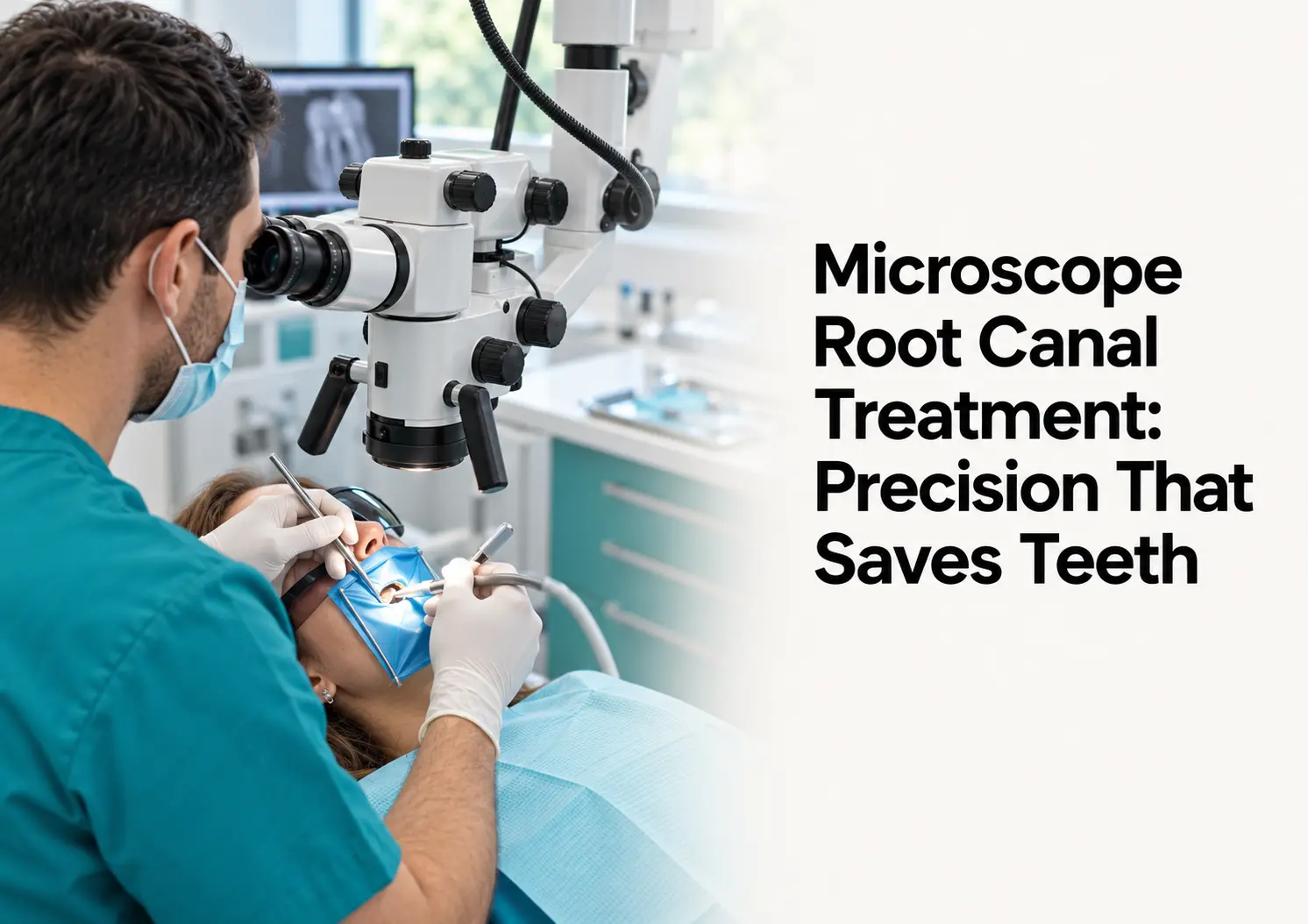
Microscope Root Canal Treatment: Precision That Saves Teeth
A root canal can only treat the small spaces the dentist finds. Extra pathways, narrow openings, blockages, or tiny cracks can make a tooth harder to treat.
Microscope root canal treatment gives the dentist a brighter, enlarged view. This supports careful cleaning and better planning. It cannot guarantee that every tooth will be saved, but it can make an important difference in difficult cases.
Why Are Root Canals Hard To See?
The inside of a tooth is not one straight space. Thin pathways may curve, divide, narrow, or hide behind one another. Back teeth can be especially complex.
Think of cleaning a dark room through a keyhole. You may reach the main area but miss a narrow corner. An untreated space may allow pain or infection to continue.
How Does A Dental Microscope Help?
A dental microscope sits above the patient. Strong lighting and magnification help the dentist see details normal vision may miss.
Professional guidance on dental microscopes explains that magnification can help find hidden pathways, locate broken tools, and preserve natural tooth structure.
Finding Hidden Tooth Pathways
An extra pathway can be extremely small. A dental microscope root canal provides a clearer view of where these openings begin. Finding one may explain why an earlier treatment did not settle the tooth.
Spotting Cracks And Blockages
Bright light may reveal fine lines, hardened areas, old filling material, or a broken tool. Not every line means the tooth is lost, but the view helps a root canal specialist judge the damage more accurately.
Protecting Healthy Tooth Structure
Searching without a clear view may require a wider opening. Microscope endodontics, which simply means root canal care with magnification, supports a more controlled approach and may preserve more of the tooth.
Microscope Root Canal Vs Standard Care
Both treatments clean and seal the inside of the tooth. The main difference is visibility.
| Point | Standard Root Canal | Microscope Root Canal |
| View | Normal vision or magnifying glasses | Strong light and higher magnification |
| Simple teeth | Often suitable | Can also be used |
| Difficult teeth | Hidden areas may be harder to find | Small areas are easier to inspect |
| Previous treatment | Old material may limit access | Magnification guides careful removal |
| Cost and time | May be lower | May be higher in complex cases |
A microscope improves vision, but it does not replace skill, imaging, or careful planning.
When Does Microscope Precision Matter?
Microscope root canal treatment is useful when a tooth has hidden spaces, previous work, or hard-to-see damage.
When A Previous Root Canal Still Hurts
A pathway may have been missed, the seal may have failed, or a crack may be present. A root canal specialist can assess whether repeat treatment may help.
When A Back Tooth Has Hidden Paths
Molars may contain several tiny pathways that are hard to see on regular images. Magnification helps locate them without making an unnecessarily large opening.
When A Tooth Has A Crack Or Blockage
Hardened material, an old filling, or a broken tool can block access. A microscope gives the dentist better control, although a deep crack may still make the tooth impossible to save.
What Happens During Microscope Treatment?
Most visits follow four clear steps.
First The Tooth Is Checked
The dentist reviews your symptoms, images, previous work, bite, and remaining tooth strength. You should receive a clear explanation of the likely outcome.
Next The Tooth Is Numbed
The area is numbed, and a protective sheet keeps the tooth clean and dry. The microscope changes what the dentist sees, not what you feel.
Then The Small Spaces Are Cleaned
The dentist locates each opening, removes damaged material, and cleans the pathways. Repeat care may require removing an old filling. Learn more about root canal treatment.
Finally The Tooth Is Protected
After sealing, the tooth needs a strong final repair. Back teeth often require dental crowns because they handle heavier chewing pressure.
Can Every Tooth Be Saved?
No. Precise root canal treatment improves visibility, but it cannot repair every problem. Removal may be necessary when a crack extends too far, little strong tooth remains, or the surrounding support is badly damaged.
How Do You Choose A Root Canal Specialist?
Ask about experience with difficult or previously treated teeth and whether the microscope is used during key steps. Also ask:
- What makes my tooth difficult?
- Is a hidden pathway or crack suspected?
- What is the realistic chance of saving it?
- Will I need more than one visit?
- What final repair will protect it?
- What happens if treatment is unsuccessful?
Clear answers help you compare cost, time, and long-term value.
What Happens After Root Canal Treatment?
Mild tenderness when biting can last a few days. Avoid hard chewing on the tooth until its permanent filling or crown is complete.
Contact the dentist if pain worsens, swelling appears, the temporary filling loosens, or your bite feels unusually high. Completing the final repair promptly helps protect the tooth.
A Clearer View Can Save Teeth
Microscope root canal treatment helps the dentist see hidden details, work with greater control, and make a better decision about saving the tooth. For continuing pain, a difficult back tooth, or an unsuccessful earlier treatment, ask whether microscope-assisted care could strengthen your treatment plan.
Why Choose Northgate Dental Center?
Northgate Dental Center combines detailed evaluation, modern technology, and clear explanations to help patients make confident treatment decisions. Our team focuses on comfort, careful tooth-saving care, and realistic recommendations. Whether you need first-time treatment or a second opinion, we provide personalized support from examination through final tooth protection and recovery.