Does My Child Need a Surgical Tooth Extraction? Signs and Reasons
Hearing that your child may need a tooth removed can be worrying. You may wonder whether the tooth can be saved, whether routine removal will work, and what recovery will involve.
A pediatric tooth extraction becomes surgical when a tooth is trapped, badly broken, hidden under the gum, or difficult to reach safely. An examination and X-ray help the dentist choose between repair, monitoring, guidance into place, routine removal, or surgery.
How Do Normal And Surgical Tooth Extractions Differ?
A normal and surgical tooth extraction differ mainly in how the tooth is positioned, reached, removed, and how long recovery may take.
| Comparison | Normal Tooth Extraction | Surgical Tooth Extraction |
| Tooth position | The tooth is fully visible above the gum. | The tooth may be partly or fully hidden under the gum. |
| When it is used | It is used when the tooth is easy to reach and remove. | It is used when the tooth is trapped, badly broken, or difficult to reach. |
| Removal method | The dentist gently loosens and removes the tooth. | The dentist may make a small opening in the gum to reach the tooth safely. |
| Common reasons | A loose baby tooth, severe damage, or a visible tooth that cannot be saved. | An impacted tooth, a tooth broken below the gumline, an extra tooth, or difficult roots. |
| Treatment time | It is usually quicker and more straightforward. | It may take longer because the tooth requires careful access. |
| Stitches | Stitches are usually not needed. | Dissolving stitches may sometimes be used. |
| Recovery | Mild soreness is common, and recovery is often faster. | Swelling and soreness may last slightly longer, depending on the difficulty. |
| How the dentist decides | An examination may be enough for a clearly visible tooth. | X-rays are usually needed to check the tooth’s position, roots, and nearby teeth. |
A surgical tooth extraction for kids is not automatically necessary just because a tooth is painful or damaged. The dentist recommends it only when a normal extraction cannot remove the tooth safely or completely.
Which Child Tooth Signs Need A Check?
Persistent Pain Or Chewing Trouble
Book a dental check if your child avoids one side while eating, wakes with tooth pain, or cannot bite comfortably. Possible causes include deep damage, infection, or a tooth growing in the wrong direction.
Swollen Gum Or Face
A red gum, small bump, bad taste, or facial swelling may signal infection. Seek prompt care when swelling grows, pain becomes stronger, or fever develops.
Delayed Tooth Growth
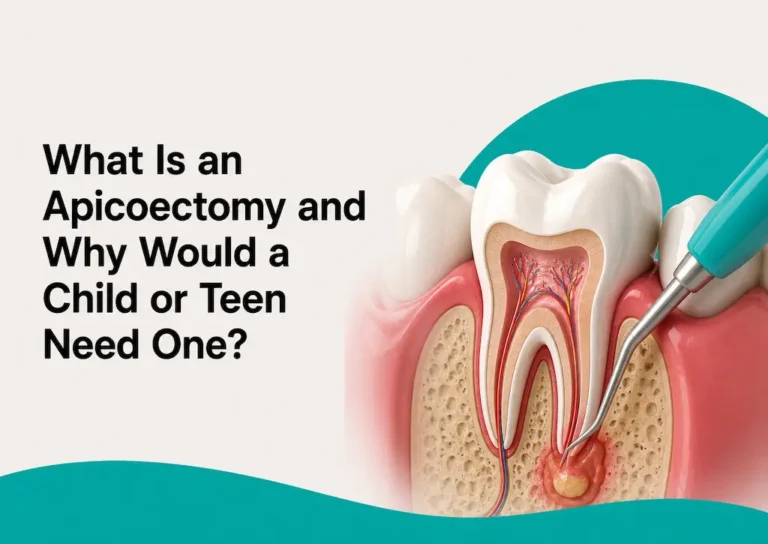
An impacted tooth in a child is a tooth trapped beneath the gum or in the jaw. One adult tooth may be missing, a baby tooth may remain longer than its matching tooth, or a new tooth may appear behind it.
Broken Tooth Near The Gum
A fall, sports injury, or deep cavity can leave too little visible tooth for normal removal.
Why Can Surgical Removal Be Safer?
Trapped Tooth Under The Gum
Some trapped teeth can be watched or guided into place. Others may block normal growth, press against nearby teeth, or remain difficult to clean. An early orthodontic treatment provider can help decide whether creating space may allow the tooth to grow normally.
Tooth Broken Below The Gumline
When the top has broken away, there may be nothing safe to hold during routine removal. A surgical approach gives the dentist controlled access to the remaining tooth.
Damage Too Deep To Repair
A damaged tooth may sometimes be restored with a dental filling, dental crown, or another treatment. Removal may be recommended when too little healthy tooth remains or infection keeps returning.
Baby Tooth Blocking An Adult Tooth
A baby tooth extraction may help when a firm baby tooth blocks the adult tooth’s path. However, an adult tooth growing behind a baby tooth does not automatically mean removal is needed.
Extra Tooth Or Severe Crowding
An extra tooth can block a front tooth, while severe crowding may leave no safe growth path. X-rays help the dentist and orthodontist plan the least disruptive option.
Can Your Child’s Tooth Be Saved?
Ask whether the tooth can be repaired, watched, or guided into place before agreeing to removal. The dentist considers how much healthy tooth remains, whether a baby tooth is close to falling out, and whether the tooth is harming its neighbors.
For a damaged adult tooth, root canal care may sometimes preserve it. The American Academy of Pediatric Dentistry guidance supports reviewing tooth position, root development, and nearby growing teeth before surgery.
What Happens At The Tooth Extraction Visit?
Dental Exam And X-Rays
The dentist checks the tooth, gums, available space, nearby teeth, and symptoms. X-rays show the tooth’s position, roots, and closeness to adult teeth below or beside it.
Numbing And Comfort Planning
The area is numbed before removal. The comfort plan depends on your child’s age, anxiety, ability to sit comfortably, number of teeth, and expected difficulty.
Careful Tooth Removal
The dentist creates safe access, removes the hidden or broken tooth, and may use dissolving stitches. Parents receive instructions for eating, brushing, activity, and pain control.
Pediatric Dentist Or Oral Surgeon
Begin with a pediatric dentist in Revere. Complex pediatric oral surgery may be handled by an oral surgeon in Revere.
What Helps After Tooth Removal?
Offer soft, cool or lukewarm foods and quiet rest. Keep your child from biting a numb lip, poking the area, or returning to sports too soon. Follow the dentist’s specific brushing and rinsing instructions.
A space maintainer may be considered when a back baby tooth is lost early and the adult tooth is not ready to grow in. It is not needed after every baby tooth extraction.
Call the dentist for continued bright-red bleeding, pain that is not controlled, worsening swelling, fever, or trouble drinking. Children’s hospital guidance also advises calling for continued bleeding or pain that does not improve.
Which Questions Should Parents Ask?
Before child surgical tooth extraction, ask:
- Can the tooth be repaired, watched, or guided into place?
- Why will routine removal not work?
- What does the X-ray show?
- Could a nearby adult tooth be affected?
- Who will perform the removal?
- Will a space maintainer or braces be needed?
- When can my child return to school and sports?
Get Clear Answers Before Treatment
A child surgical tooth extraction may be appropriate when a tooth is trapped, badly broken, difficult to reach, or threatening nearby teeth. Schedule an evaluation, review the X-ray, ask about ways to save the tooth, and understand recovery before deciding. A search for surgical extraction near me should lead to an examination, not automatic removal.
Why Choose Northgate Dental Center?
Northgate Dental Center brings children’s dentistry, tooth removal, and oral surgery support together in one Revere location. Our team explains X-rays clearly, discusses options before treatment, and plans care around your child’s comfort. Parents receive practical home-care instructions and coordinated follow-up when growing teeth or spacing need continued attention later.