My Child Hit Their Tooth: What Should I Do First?
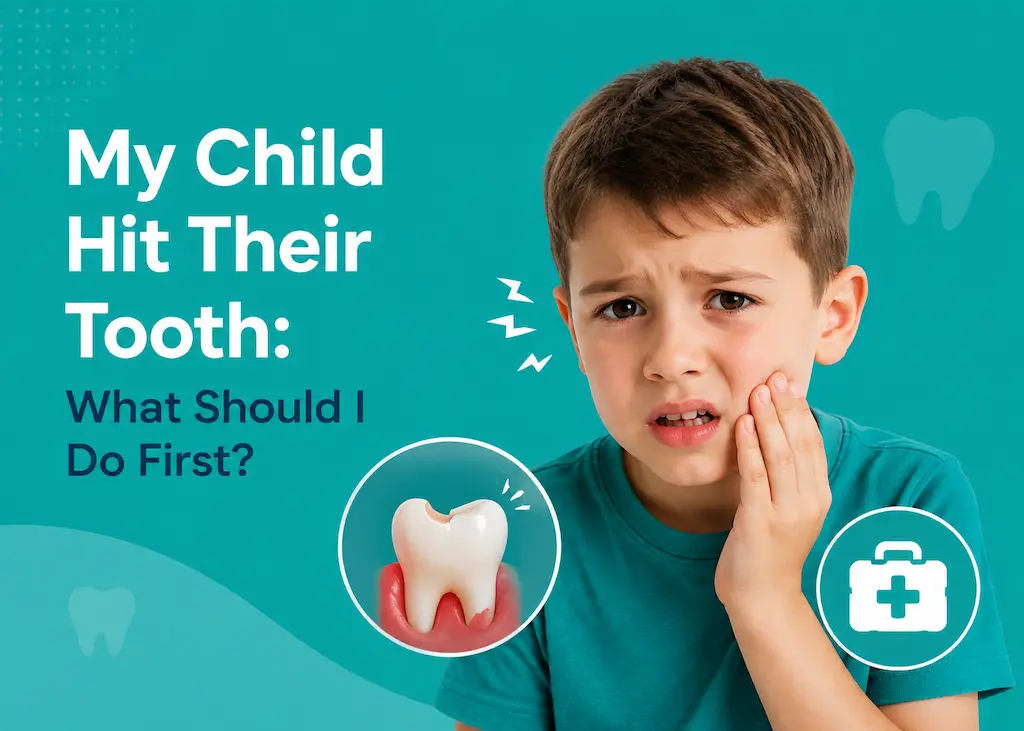
When parents search “what to do if a child hits teeth” they need clear steps fast. First, check that your child is awake, breathing normally, and acting like themselves. Then stop any bleeding, look at the tooth without moving it, and call a dentist if it is loose, broken, shifted, or missing.
Some dentists call this dental trauma in kids, but parents can think of it simply as a tooth injury caused by a fall or hit. Calm, ordered steps can help protect the tooth.
Child Hit Tooth: What To Do First
Check your child before focusing on the tooth. Seek urgent medical help for fainting, trouble breathing, repeated vomiting, unusual sleepiness, confusion, a deep facial cut, or bleeding that will not slow down.
When your child seems alert:
- Ask them to rinse gently with cool water.
- Press clean gauze against bleeding gums or lips.
- Hold a cold pack wrapped in cloth against the cheek.
- Look for a loose, chipped, moved, shorter, longer, or missing tooth.
- Do not pull, push, or repeatedly test the tooth.
Note when the fall happened and take a clear photo if possible.
Baby Tooth Or Permanent Tooth?
A knocked-out baby tooth should not be placed back into the gum because it could harm the tooth growing underneath. A knocked-out permanent tooth needs immediate care and must stay moist while you travel.
Age alone is not enough to identify the tooth. When unsure, call an emergency pediatric dentist in Revere before trying to replace it.
What Does The Injured Tooth Look Like?
Your next step depends on what you see.
Tooth Looks Normal But Hurts
A tooth may look unchanged but hurt when touched or used for biting. Avoid testing it repeatedly. Offer soft foods and call the dentist if pain continues, the bite feels different, or the tooth becomes sensitive.
Tooth Is Loose After A Fall
A loose tooth after a fall should not be wiggled. Ask your child not to touch it with their fingers or tongue.
Serve yogurt, eggs, pasta, soup, or mashed potatoes. Avoid apples, carrots, crusty bread, and chewy candy. A slightly loose tooth may firm up, but a very loose tooth can affect eating or become a choking risk. Arrange a same-day dental check.
Tooth Is Chipped Or Broken
Save the broken piece in a clean container and rinse your child’s mouth gently. Do not file, glue, or smooth the tooth yourself.
Small chips may be repaired with dental bonding, while larger breaks may need a stronger repair such as a dental crown. The dentist will recommend the safest repair.
Tooth Has Moved Position
A moved tooth may look longer, shorter, tilted, pushed backward, or pushed into the gum. Your child may also say their teeth no longer meet normally.
Do not force it back into place. Keep your child from biting on it and contact a dentist promptly. A tooth pushed into the gum can look missing, so it still needs to be checked.
Tooth Is Completely Out
For a baby tooth, control bleeding and call the dentist. Do not put it back.
For a permanent tooth, hold only the white top. Do not scrub the root. Rinse it gently with milk or a saltwater solution if dirty, then keep it moist in milk or a tooth-saving solution. The American Academy of Pediatrics’ knocked-out tooth guidance explains the immediate steps.
When Does A Tooth Injury Need Emergency Care?
Call an emergency pediatric dentist immediately when a permanent tooth is out, a tooth is badly loose, a tooth has moved, a large piece has broken, your child cannot bite normally, or you cannot identify a missing tooth.
Go to an emergency room for trouble breathing, fainting, repeated vomiting, unusual behavior, uncontrolled bleeding, serious facial swelling, or a possible broken jaw.
What Changes Should Parents Watch For?
Problems may appear hours or days after a child falls and hits a tooth. Watch for increasing pain, swelling, fever, a bump on the gum, a bad taste, fluid near the tooth, or pain while biting.
Also check whether the tooth becomes darker, grayer, or looser. A color change does not always mean removal is needed, but a dentist should examine it, especially when pain or swelling appears.
How Can An Injured Tooth Heal?
Keep meals soft and encourage your child to chew on the other side. Brush gently with a soft toothbrush so food does not collect around the sore gum.
Pause contact sports, rough play, and activities that could cause another hit. Attend the follow-up appointment even if the tooth feels better because the dentist may need to check how it is settling.
Which Tooth Injury Mistakes Should You Avoid?
Do not replace a baby tooth, scrub a permanent tooth’s root, let a knocked-out tooth dry, push a shifted tooth into place, let your child wiggle a loose tooth, or place aspirin directly on the gum. Do not wait for severe pain before calling a dentist.
Act Quickly To Protect Your Child’s Tooth
When your child hits a tooth, check their overall condition first, stop bleeding, reduce swelling, and identify whether the tooth is loose, broken, moved, or missing. Never replace a baby tooth. For visible changes, continuing pain, or uncertainty, contact a pediatric dentist promptly.
Why Choose Northgate Dental Center?
Northgate Dental Center provides calm, child-friendly care when a fall damages a tooth. Our team checks the injured tooth, nearby teeth, gums, and bite, then explains the next steps clearly. Families in Revere can receive prompt support, practical home-care instructions, and follow-up focused on protecting their child’s healthy growing smile.