Why Would My Child’s Root Canal Need Retreatment?
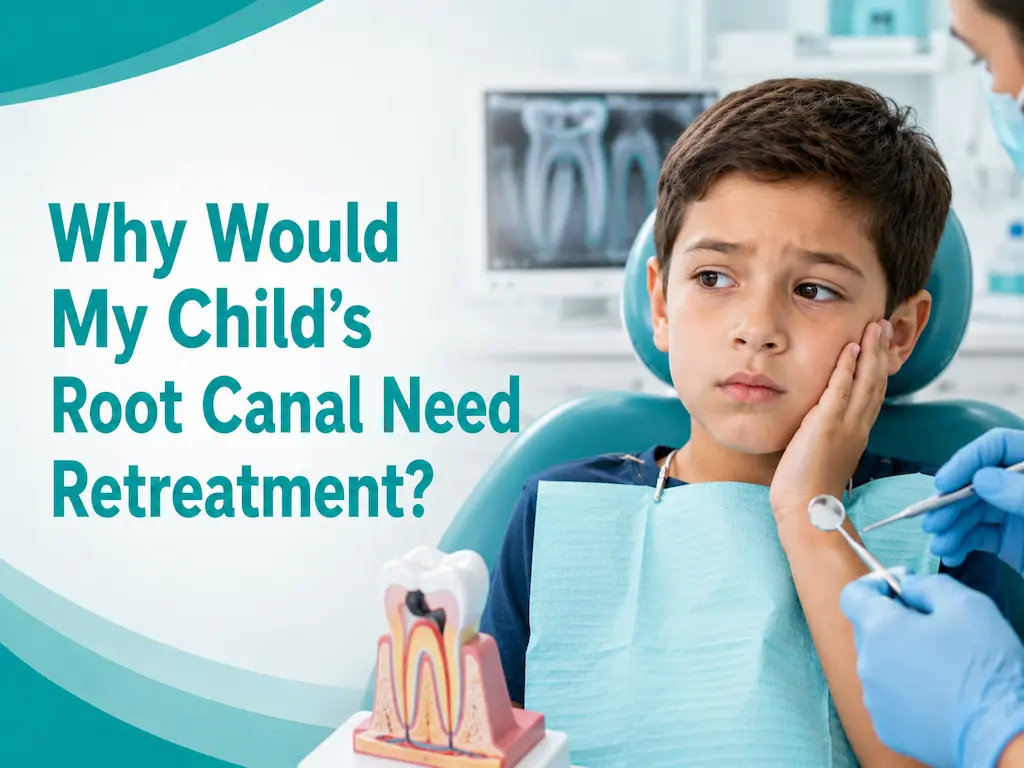
Your child already had a root canal, so returning pain can be worrying. Root canal retreatment for children may be recommended when the tooth does not heal or develops a new problem. It does not automatically mean removal. The dentist must find the cause and decide whether the tooth can be saved.
What Is Root Canal Retreatment for Children?
Retreatment means reopening a tooth that previously received root canal treatment, removing the old material, cleaning it again, and resealing it. Dentists may call this endodontic retreatment, but it simply means treating the tooth a second time.
The goal is to remove the infection and keep the tooth when practical. Parents can review the process through the American Association of Endodontists.
Why Can A Treated Tooth Have Problems Again?
A repeat problem does not always mean poor treatment. Teeth may contain hidden spaces or develop new damage later.
Some Infection Was Left Behind
Tiny pathways can be difficult to reach. If germs remain, pain, swelling, or a gum bump may appear soon or much later.
A Hidden Area Was Missed
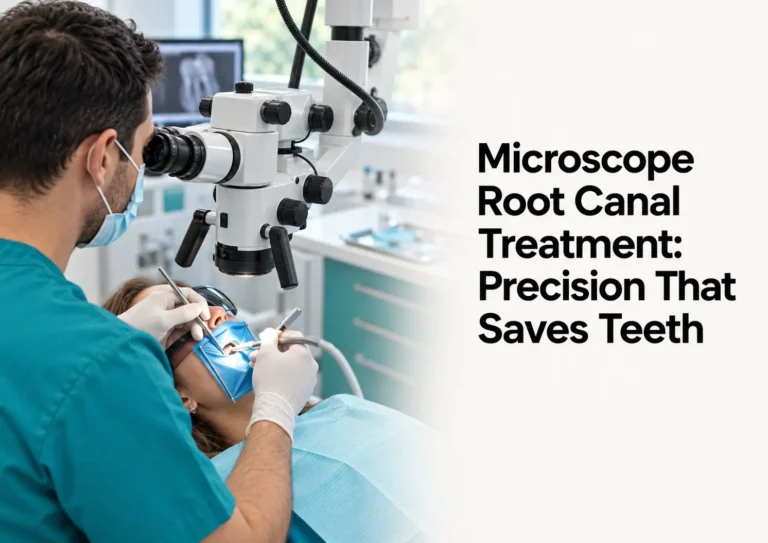
Some teeth have extra or curved spaces that regular X-rays may not clearly show. A specialist can use magnification and detailed imaging to find them.
The Crown Or Filling Became Loose
A treated tooth needs a tight seal. If a filling cracks, a crown loosens, or the final crown is delayed, germs may enter again. A protective dental crown can help shield a weakened tooth.
A New Cavity Or Crack Developed
A cavity may form around a filling or crown. Injury, hard foods, or grinding can crack the tooth and let germs enter.
The Tooth Did Not Heal As Expected
Sometimes soreness remains after careful treatment. The dentist must confirm whether it comes from the tooth, bite, or a nearby tooth before recommending retreatment.
Which Warning Signs Point to Root Canal Failure?
Mild soreness that improves can be normal. Tooth pain after root canal care is more concerning when it grows stronger, returns after disappearing, or occurs with swelling.
Pain That Stays Or Returns
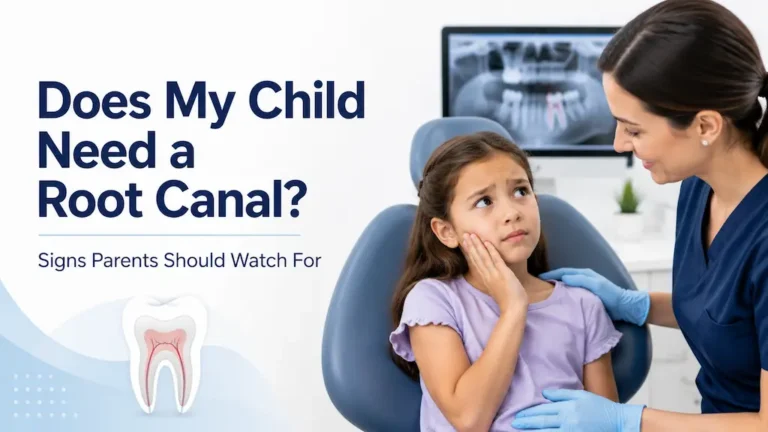
Watch for pain that lasts, wakes your child, or returns after the tooth felt normal. Younger children may become irritable during meals, touch their cheek, or avoid certain foods.
Pain When Biting Or Chewing
Your child may chew only on the other side or say the tooth hurts when the teeth meet. Possible causes include an uneven bite, irritation around the root, or a crack.
Swelling Or A Gum Bump
A pimple-like bump, puffy gum, drainage, bad taste, or facial swelling may signal infection. Do not squeeze the bump. Contact the dentist for an examination.
Changes Without Pain
A root canal infection may cause no obvious pain. A loose crown, tooth color change, recurring gum bump, or change on an X-ray may be the first clue. Regular preventive dental care helps monitor treated teeth.
Does A Baby Tooth Change The Decision?
Whether the treated tooth is a baby tooth or permanent tooth strongly affects the plan.
When It Is A Baby Tooth
The dentist considers age, when the tooth should fall out, remaining tooth strength, and the developing permanent tooth. Saving it may support chewing and spacing, but removal may be safer when damage is severe. A pediatric dentist can evaluate these factors.
When It Is A Permanent Tooth
A permanent tooth must last into adulthood, so saving it is often a priority. Retreatment may be considered when enough healthy teeth remain, there is no deep crack, and the tooth can be protected afterward.
What Happens At The Follow-Up Visit?
The dentist does not choose retreatment from symptoms alone. The visit focuses on finding the source.
The Dentist Checks The Tooth
You may be asked when the pain began, what triggers it, and whether swelling comes and goes. The dentist checks the crown or filling, gums, bite, and tenderness around the tooth.
X-Rays Help Find The Cause
X-rays may show changes around the root, new decay, or an area that did not heal. Detailed pictures may be recommended when a crack or hidden space is suspected.
The Dentist Explains The Next Step
The solution might be a bite adjustment, new crown, retreatment, or referral to an endodontist in Revere. If saving the tooth is unlikely, the dentist may discuss tooth extraction and ways to protect spacing or chewing.
Is Retreatment Better Than Tooth Removal?
There is no single answer for every child. Retreatment may be preferred when the tooth is strong enough to restore and important for chewing or spacing. Removal may be considered for a deep crack, severe damage, little remaining tooth structure, or a poor chance of lasting repair.
Ask what caused the problem, whether the tooth can be restored securely, what happens if retreatment fails, and how each choice may affect future dental needs.
When Does Tooth Swelling Need Urgent Care?
Call the dentist promptly for severe or worsening pain, pus, fever, a rapidly growing gum bump, or facial swelling. Seek emergency medical care if swelling affects breathing or swallowing, spreads toward the eye or neck, or your child appears seriously unwell.
Do Not Ignore Returning Tooth Pain
Returning pain does not always mean tooth loss. An examination can reveal a loose crown, uneven bite, cavity, crack, or infection. Contact the dentist when pain returns, chewing changes, or swelling appears so treatment can begin early.
Why Choose Northgate Dental Center?
Northgate Dental Center brings pediatric dentists, root canal specialists, and restorative care together in one Revere office. Our team uses careful evaluation, modern imaging, and child-focused communication to explain every option clearly. Families receive coordinated care designed to relieve pain, protect growing smiles, and preserve natural teeth whenever safely possible.