What Is an Apicoectomy and Why Would a Child or Teen Need One?
A root canal is meant to save an infected tooth, but sometimes the area around the root does not heal. Pain may return, swelling may appear, or a small bump may form on the gum. In selected cases, an apicoectomy for children may remove the remaining infection while keeping the permanent tooth.
Parents usually want to know whether this treatment is necessary, painful, or suitable for a growing child. The answer depends on root development, earlier care, and whether a simpler option could work first.
What An Apicoectomy Means For Children
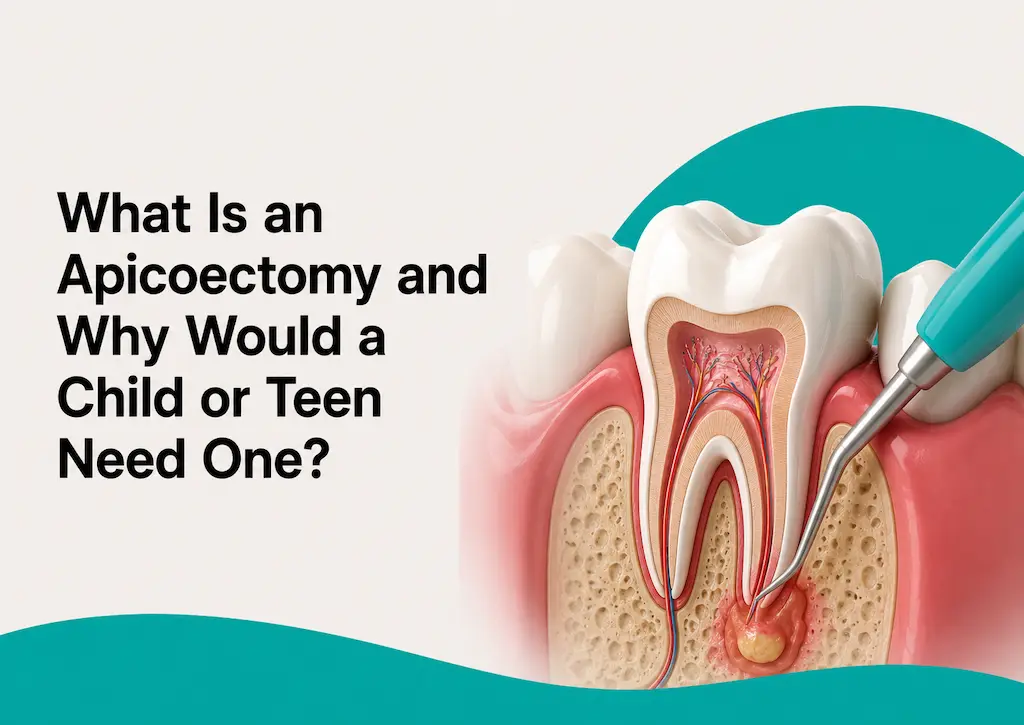
An apicoectomy procedure treats infection around the end of a tooth root. The dentist reaches the problem through a small opening in the gum, removes infected tissue and a tiny root portion, seals the root, and closes the area with stitches.
It is also called root end surgery. Unlike a standard root canal treatment, which cleans the tooth from the top, this approach reaches the infection from beside the root. The goal is to help the bone and gum heal without removing the tooth.
The American Association of Endodontists explains that bone around the root can continue healing over the following months.
Child Tooth Infection After Treatment
A treated tooth can become infected again when bacteria remain in hidden spaces or new damage prevents proper healing.
Infection Remains After A Root Canal
A child dental infection after a failed root canal treatment does not always mean the first care was poor. A root may contain tiny branches, unusual curves, or a narrow area that was difficult to clean. Bacteria can remain and cause recurring pain or swelling.
Hidden Damage Blocks Healing
A fall, sports injury, deep cavity, small crack, or blocked root space may stop healing. For example, a teen may injure a front tooth, receive treatment, and develop a gum bump months later.
A Permanent Tooth May Be Saved
Keeping a permanent tooth supports chewing, speech, appearance, and normal spacing. An endodontist can check whether enough healthy tooth structure remains for a lasting repair.
Baby Teeth And Permanent Teeth
Treatment depends on whether the affected tooth is temporary, permanent, or still developing beneath the gum.
Baby Teeth Need Different Planning
This procedure is uncommon for a baby tooth. The dentist considers when it should fall out, whether infection could affect the developing adult tooth, and whether removal is safer. A pediatric dentist can explain how the tooth fits into the child’s growth.
Young Permanent Roots May Still Grow
A newly erupted adult tooth may have an unfinished root. The dentist may first consider a method that helps the root continue forming. Age alone does not decide treatment. Root maturity, infection size, tooth strength, and previous care matter more.
When An Apicoectomy For Children Is Needed
The dentist considers the child’s symptoms, root growth, previous treatment, and available alternatives before recommending this procedure.
Symptoms Parents May Notice
Watch for returning pain, swelling, a pimple-like gum bump, drainage, a bad taste, biting pain, or tenderness around a treated tooth. Some children have no clear symptoms, and the problem appears on a follow-up dental image.
Dental Images Find The Cause
An X-ray can show changes near the root. A three-dimensional scan may be suggested when the dentist needs to locate a hidden root, crack, or nearby structure before treatment.
Other Options Come First
The dentist may compare repeating the root canal, monitoring healing, treating a developing root differently, performing root end surgery, or removing a tooth that cannot be saved. A second opinion can help when the choices are unclear.
What Happens During Root End Surgery
Comfort Comes First
The area is numbed before treatment. A child or teen may need extra comfort support based on anxiety, age, health history, and appointment length. Parents should ask who provides it and whether eating instructions apply beforehand.
Infection Is Cleaned And Sealed
The dentist generally:
- Numbs the tooth and gum.
- Open a small area beside the root.
- Removes infected tissue and a tiny root tip.
- Seals the end of the root.
- Closes the gum with stitches.
Visit length depends on tooth position, root shape, infection, and access. Complex endodontic surgery for teens may require a specialist who regularly treats difficult root problems.
Child Recovery After Root End Surgery
Mild soreness, swelling, or bruising can occur during the first few days. Use cold packs and medicines only as directed. Offer soft foods such as eggs, yogurt, pasta, lukewarm soup, mashed potatoes, or seedless smoothies.
Keep brushing the other teeth, but avoid disturbing the treated area. Ask when your child can return to school, gym, contact sports, and instrument practice. Call the office for fever, increasing swelling, uncontrolled bleeding, worsening pain, drainage, lasting numbness, or loose stitches.
Root End Surgery Success
The outlook depends on the infection, root development, tooth location, remaining structure, cracks, sealing quality, and follow-up care. No dentist can promise that every tooth will heal.
A successful result means symptoms settle and bone gradually fills around the root. If infection returns, the dentist may consider further care or tooth extraction. Follow-up images matter because the tooth may feel normal before the bone has fully healed.
What Parents Should Ask Before Treatment
Ask whether the tooth is permanent, whether its root has finished growing, why the first treatment did not heal, and whether repeat treatment is possible. Also ask what could happen if care is delayed, how success will be checked, and what signs require an urgent call. Clear answers make the decision easier.
Why Choose Northgate Dental Center?
Northgate Dental Center provides coordinated care for children, teens, and families with infected or damaged teeth. Our team evaluates the tooth, explains every suitable option in clear language, and helps parents understand treatment, comfort, recovery, and follow-up. Schedule an evaluation today to receive a plan based on your child’s needs.